




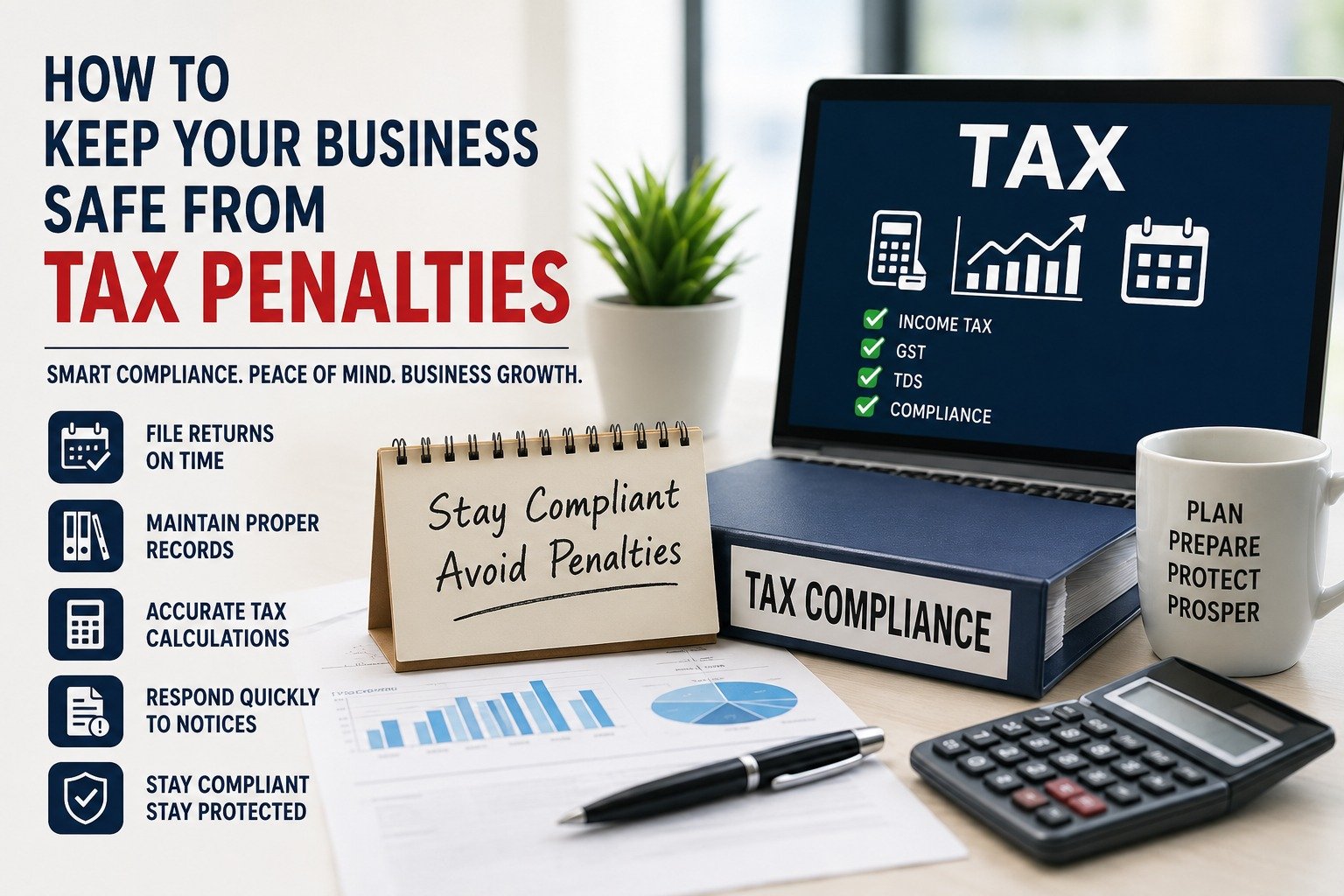
Running a business is exciting, but managing taxes correctly is just as important as increasing sales and expanding operations. Many businesses face penalties not because they intentionally break the law, but because they miss deadlines, maintain incomplete records, or fail to understand tax regulations properly.
The good news is that most tax penalties can be avoided with proper planning, accurate documentation, and timely compliance. Here are some practical ways to keep your business safe from unnecessary penalties.
1. File Your Returns on Time
Late filing is one of the most common reasons businesses receive penalties. Whether it is Income Tax, GST, TDS, or any other regulatory filing, every deadline should be carefully monitored.
Creating a compliance calendar can help you remember important dates and avoid last-minute problems.
2. Maintain Proper Financial Records
Every business should keep accurate records of:
Sales invoices
Purchase invoices
Bank statements
Payroll records
Tax payment receipts
Expense records
Proper documentation not only simplifies tax filing but also helps businesses respond quickly to notices and audits.
3. Separate Personal and Business Expenses
Many business owners make the mistake of mixing personal expenses with business transactions. This practice often creates confusion during tax assessments and can lead to unnecessary complications.
Using separate bank accounts for business activities can make accounting much easier.
4. Review Tax Calculations Carefully
Even a small mistake can result in penalties. Businesses should always verify:
Taxable income
GST liabilities
TDS calculations
Input tax credit claims
Applicable deductions
Double-checking financial records before filing returns can prevent costly errors.
5. Respond Quickly to Tax Notices
Ignoring official notices can make matters worse. Businesses should carefully review every notice and provide accurate information within the specified period.
Professional guidance can help ensure that responses are complete and legally compliant.
6. Conduct Regular Internal Reviews
Regular reviews help identify errors before they become serious problems. Monthly or quarterly assessments can improve accuracy and strengthen financial management.
7. Seek Professional Guidance
Tax regulations change frequently, and staying informed is essential. Working with experienced professionals allows businesses to remain compliant while focusing on growth and long-term success.